
The REDS™ Loop: Why We Never Let Design Outrun Strategy
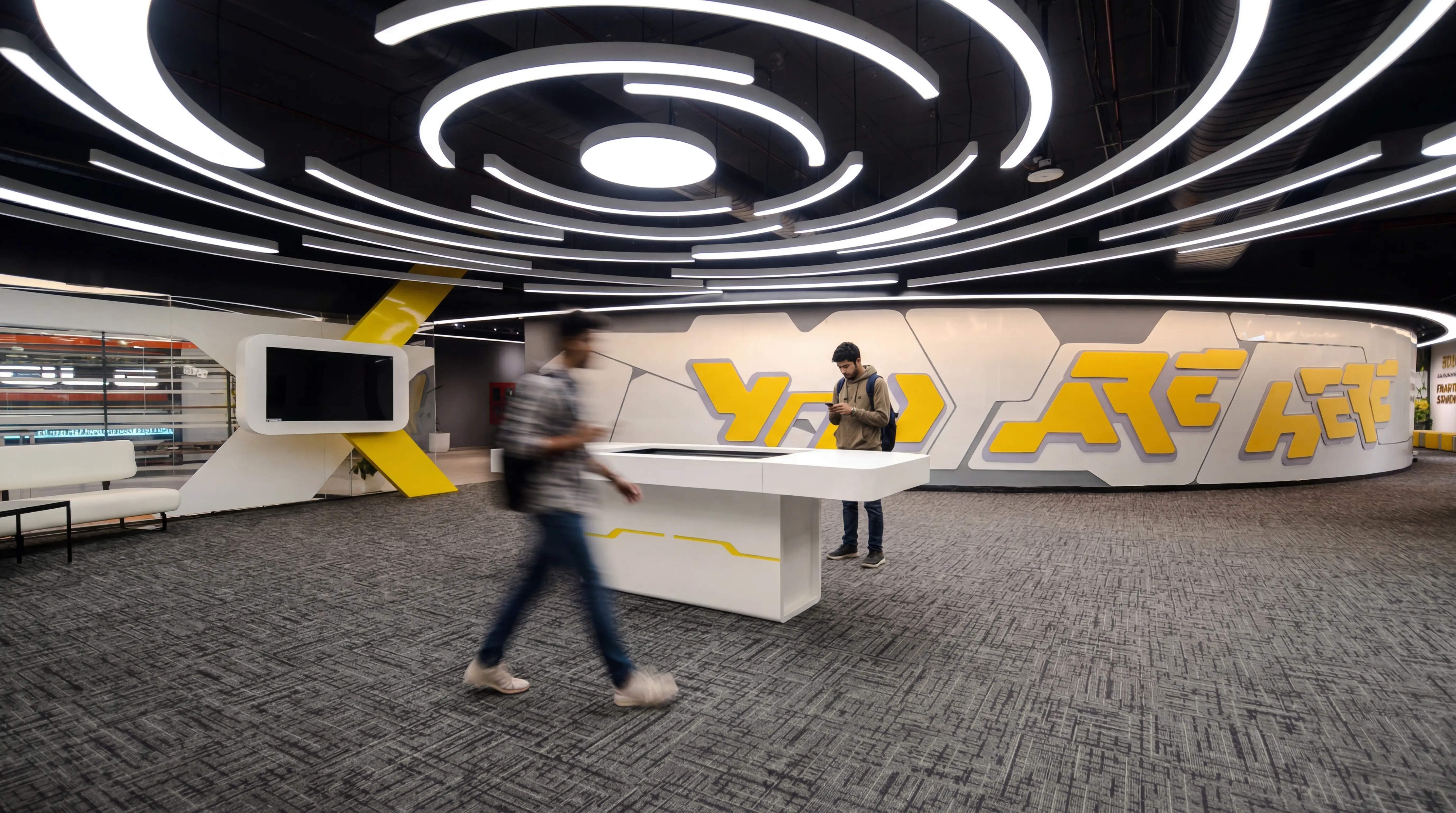
Every experience center begins with an exciting idea. A dynamic entrance. Interactive technology. Immersive storytelling. Architectural features that leave visitors impressed.
But the most successful experience centers don't begin with design.
They begin with strategy.
At REDS™, we've learned that when design moves ahead of strategy, projects often become visually impressive but commercially ineffective. They may look exceptional, yet fail to communicate the right message, influence visitor decisions, or support long-term business goals.
That's why every project follows what we call The REDS™ Loopa continuous process that keeps business strategy, experience design, technology, and performance connected from concept to completion.
What Is the REDS™ Loop?
The REDS™ Loop is a strategic framework that ensures every design decision supports a clearly defined business objective.
Unlike a traditional linear design process, where strategy is discussed once and rarely revisited, the REDS™ Loop treats strategy as a continuous reference point. Every idea, interaction, technology choice, and spatial decision is evaluated against the question:
Does this help achieve the intended business outcome?
If the answer is no, the design evolves until it does.
This approach helps create experience centers that remain relevant, measurable, and adaptable long after they open.
Why Design Alone Isn't Enough
Many organizations assume that an experience center's success depends on impressive architecture or advanced technology.
In reality, visitors rarely remember individual design elements. They remember how the experience made them feel and what they understood by the end of their journey.
A beautifully designed innovation center without a compelling story is simply an attractive building.
Similarly, the latest immersive technology adds little value if it doesn't reinforce the company's message or solve a visitor's problem.
Design should always serve strategy, not replace it.
The Four Stages of the REDS™ Loop
The REDS™ Loop is built around four connected stages that continually inform one another throughout the project.
1. Define the Business Objective
Every project begins by identifying the purpose of the experience center.
Is the goal to strengthen customer trust? Showcase innovation? Support investor conversations? Accelerate sales? Improve employee engagement?
Without a clearly defined objective, even the most creative ideas lack direction.
Strategy establishes the destination before design begins.
2. Design the Experience
Once objectives are clear, the visitor journey takes shape.
Rather than asking, "What should the space look like?" we ask:
What should visitors think?
What should they feel?
What should they remember?
What action should they take after leaving?
These questions influence spatial planning, storytelling, interaction design, digital experiences, and technology integration.
Every touchpoint becomes intentional rather than decorative.
3. Validate Every Decision
The most overlooked stage in many projects is validation.
Every feature should answer a simple question:
Does this improve the visitor experience or support the business objective?
If a technology installation creates complexity instead of clarity, it is reconsidered.
If an exhibit doesn't contribute to the narrative, it is redesigned.
Validation prevents unnecessary features while ensuring every investment creates measurable value.
4. Learn and Improve
An experience center should never be considered "finished."
Visitor behaviour changes. Business priorities evolve. New products launch. Technology advances.
The REDS™ Loop treats every completed project as the beginning of continuous improvement.
Performance data, visitor feedback, and operational insights help refine the experience over time, ensuring the center continues to deliver value for years rather than months.
Why Experience Center Consultancy Requires More Than Design Expertise
An effective experience center consultancy extends beyond architecture and interiors.
It combines business strategy, visitor psychology, storytelling, technology planning, operational thinking, and measurable outcomes into one integrated process.
This broader perspective helps organizations avoid common challenges such as:
Technology that becomes outdated quickly.
Spaces that lack a clear narrative.
Visitor journeys that feel disconnected.
Interactive experiences without purpose.
Significant investments with limited business impact.
By aligning every design decision with strategic objectives, organizations create experience centers that continue to evolve alongside their business.
How the REDS™ Loop Creates Better Experiences
The REDS™ Loop isn't intended to limit creativityit gives creativity direction.
When strategy guides design, every element contributes to a larger purpose.
Architecture supports storytelling.
Technology enhances engagement.
Content builds understanding.
Space influences behaviour.
Measurement drives improvement.
Instead of treating these disciplines independently, the REDS™ Loop connects them into one continuous system where every decision strengthens the overall experience.
Strategy Is the Foundation of Every Great Experience Center
Many experience centers are remembered because they look impressive.
The best experience centers are remembered because they change how visitors think.
That difference rarely comes from architecture alone.
It comes from aligning every design decision with a clear strategic objective and continuously refining the experience as business needs evolve.
At REDS™, strategy is not a phase that ends before design begins. It is the thread that connects every conversation, every decision, and every visitor interaction.
That's why we never let design outrun strategy.
Frequently Asked Questions
What is the REDS™ Loop?
The REDS™ Loop is a strategic framework developed by REDS™ that continuously connects business strategy, experience design, technology, and performance throughout the lifecycle of an experience center.
Why should strategy come before design?
Strategy defines what the experience center should achieve. Design then becomes a tool to communicate that objective effectively rather than simply creating an attractive space.
What does an experience center consultancy do?
An experience center consultancy helps organizations plan, design, and optimize spaces that communicate their brand, innovation, products, and vision through visitor experiences aligned with business goals.
Can an experience center evolve after it opens?
Yes. The most successful experience centers continuously update their content, technology, and visitor experiences based on changing business priorities and visitor insights.
Why do experience center projects fail?
Many projects prioritize architecture or technology without defining a clear visitor journey or business objective. A strategic framework helps ensure every investment contributes to meaningful outcomes.