
What Is REDS™? The Difference Between Decorating a Space and Engineering One
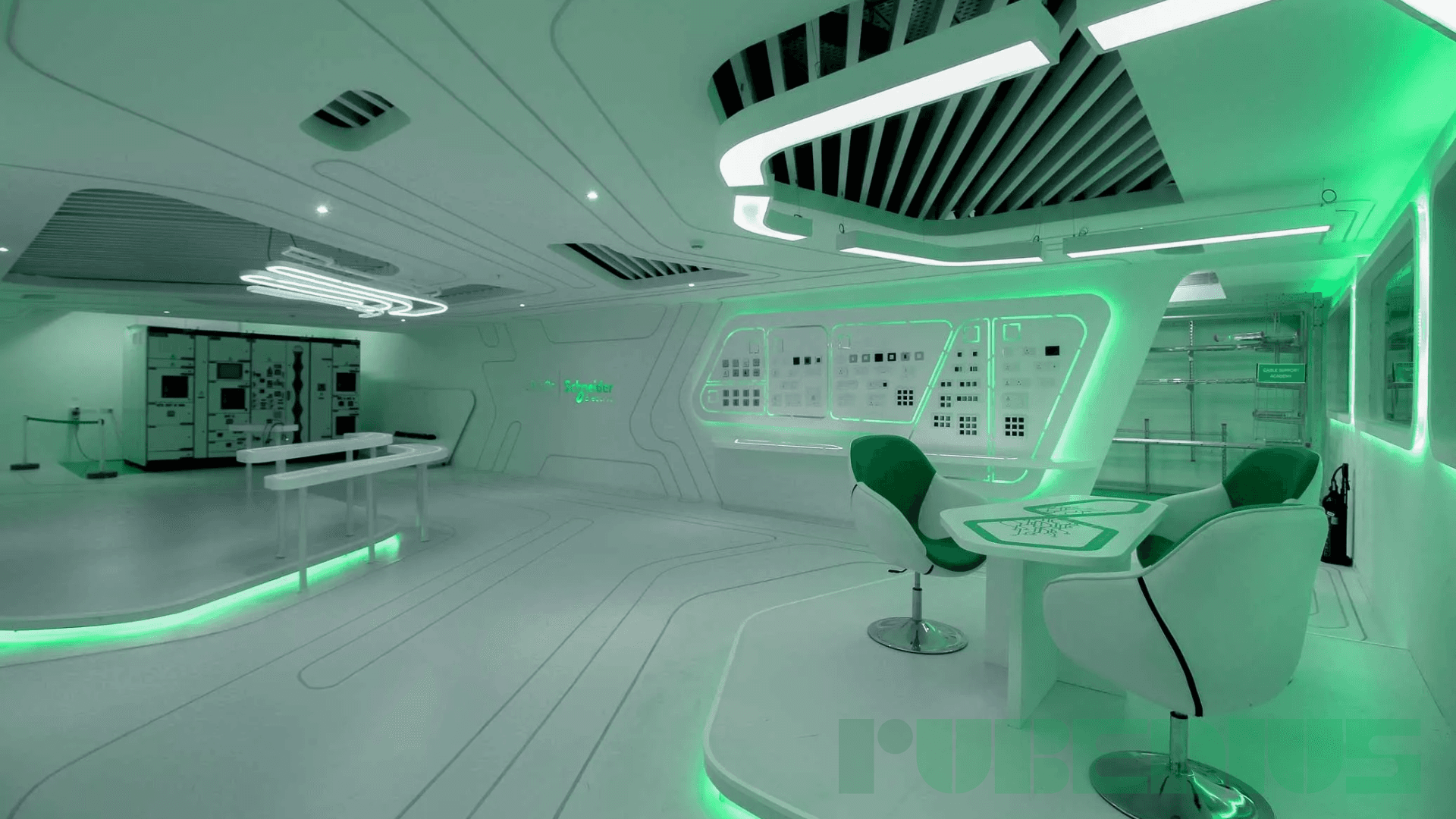
What is REDS™?
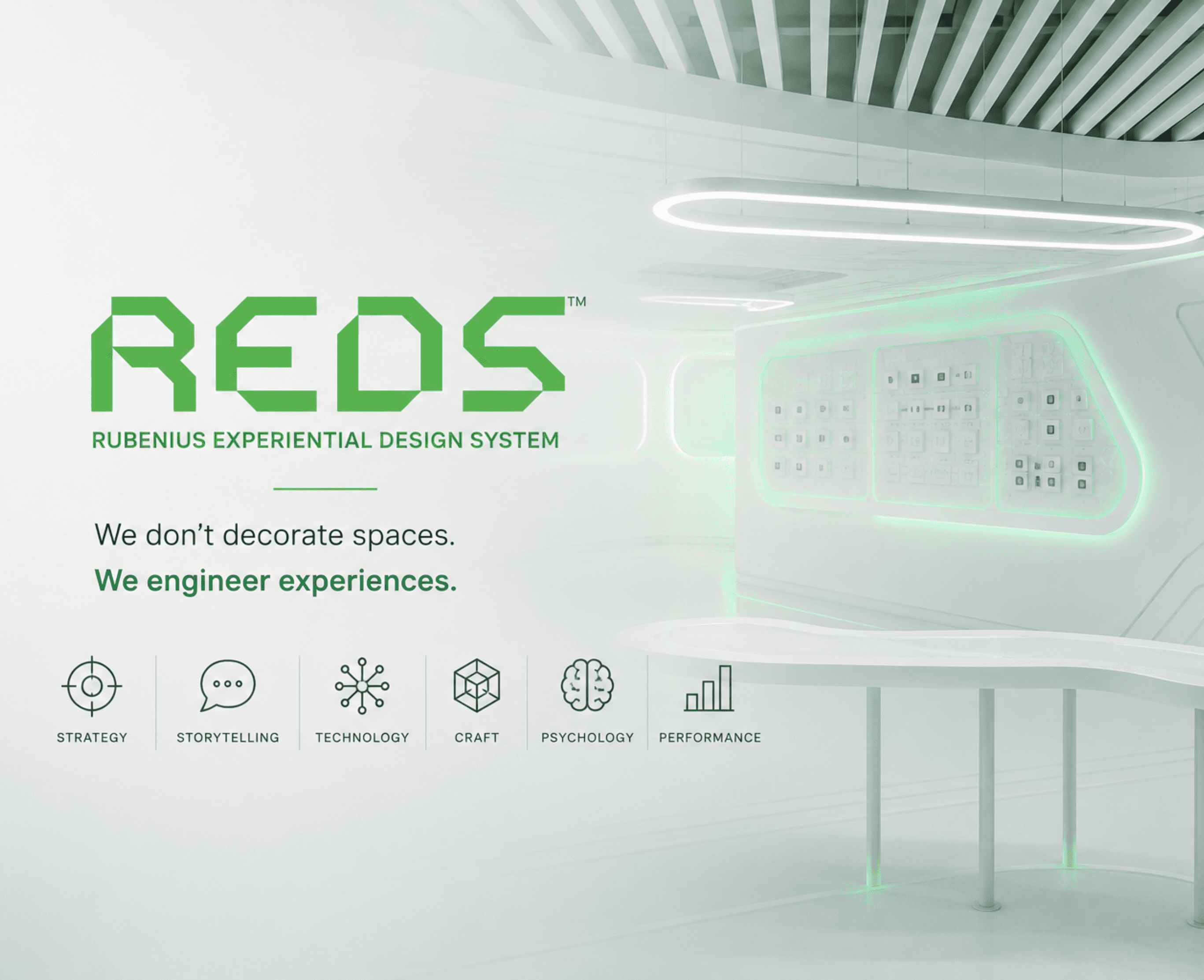
REDS™ is the Rubenius Experiential Design System, a proprietary, codified framework for experience center, innovation lab, and corporate visitor center design. It exists to replace decoration with engineering: a structured, repeatable, performance-driven system built on six concurrent pillars (strategy, storytelling, technology, craft, psychology, and performance), delivered through four accountable phases (decode, design, develop, and deploy), and validated through post-occupancy measurement at 30, 90, and 180 days. The core distinction REDS™ draws is simple: decoration improves how a space looks. Engineering determines what a space does and proves it.
A Question Worth Asking Before You Spend the Budget
Every organisation that builds an experience centre, an innovation lab, or a corporate visitor centre is really asking one question, even if they never say it out loud:
Will this work?
It will not look impressive. Visitors will not take photographs in front of it. Will it change how a partner thinks about doing business with us? Will it make an investor more confident? Will it help a new hire understand, in their first hour, what this organisation actually stands for?
Most design processes cannot answer that question. They were never built to.
REDS™ was.
Two Words, One Critical Difference
Decoration improves appearance.
Engineering changes behaviour.
This is not a semantic distinction. It is the single most important idea in how REDS™ (the Rubenius Experiential Design System) approaches every project. And once you understand it, you will never look at an experience centre the same way again.
A decorated space is selected. A material looks premium, so it is chosen. A colour feels "on-brand," so it is applied. A screen seems impressive, so it is installed. Each decision is made in isolation, judged by how it appears, and approved because nothing about it looks wrong.
An engineered space is designed backward from an outcome. Every material is selected because it produces a specific emotional response, and that response was defined before the material was sourced. Every screen exists because it serves a documented behavioural purpose, and that purpose was tested before the technology was specified. Every wall, every transition, every pause point exists because it moves a visitor through a deliberate sequence toward a predetermined understanding.
One process asks, "Does this look right?"
The other asks, "Does this work?"
REDS™ exists because the second question is the only one that matters, and almost nobody in this industry is asking it.
The Belief at the Center of REDS™
There is a single governing belief behind everything REDS™ builds:
A space is successful only if it changes how people think, feel, behave, or perform.
This sentence is doing more work than it appears to. It rejects the entire premise that design quality is subjective, a matter of taste, mood boards, and personal preference. It treats aesthetics as a means, never an end. And it insists that experience can be measured, benchmarked, and proven not simply felt and assumed.
Most of the design industry operates on three unspoken assumptions. That good design is subjective. That aesthetics are the primary outcome. That experience cannot really be measured.
REDS™ rejects all three.
Design that cannot be evaluated cannot be improved. Performance, not visual appeal, is the actual outcome an experience centre exists to deliver. And measurement frameworks are not an afterthought bolted on after the ribbon-cutting. They are built before a single concept is drawn.
Traditional design answers: How does it look? REDS™ answers: What does it do?
Why Decoration Fails Even When It Looks Beautiful
Decoration is not a minor design sin. It is a structural failure with five distinct symptoms, and they appear in almost every underperforming experience centre built in the last decade.
Aesthetic bias. Decisions driven by trends, mood boards, and personal taste rather than strategic purpose. The result is a space that is current on delivery day and irrelevant within two years because nothing about it was anchored to anything that lasts.
Fragmented thinking. Strategy, interiors, technology, branding, and operations treated as separate workstreams with separate owners. No single framework holds the project together from first workshop to opening day, so the narrative the brand team intended rarely survives contact with the technology that was specified six months later by a completely different vendor.
Absence of psychology. Human behaviour, cognitive load, and emotional experience are rarely considered systematically. The space is designed for the architectural drawing, not for the person standing inside it, hesitating at a junction that looked clear on paper.
Technology as add-on. Digital systems are layered onto a completed space instead of being integrated from the outset. The result is technology that impresses at launch and fails within months of operational use because it was installed, not engineered.
No accountability. Once the space is delivered, performance is rarely measured. There is no feedback loop, no learning cycle, no actual proof that the investment achieved anything beyond looking good in photographs.
Every one of these failures is invisible at handover. The ribbon is cut. The photographs are beautiful. The applause is genuine. And the failure only becomes visible six, twelve, eighteen months later, by which point there is no system in place to even notice it happened.
This is what decoration produces. Spaces that look finished and quietly underperform for years, with no one accountable because no one ever defined what "performing" was supposed to mean.
What Engineering Looks Like Instead
REDS™ replaces this entire approach with six concurrent disciplines, applied simultaneously to every project, every decision, every square foot.
Strategy comes first, not aesthetics, not furniture, not finishes. Every project begins by answering why the space exists and what it must change, with business outcomes defined and signed off before design begins.
Storytelling structures the visitor journey as a deliberate five-stage narrative: arrival, orientation, engagement, climax, resolution, so that nothing about how a visitor moves through the space is left to chance.
Technology is treated as infrastructure, never ornament. Every digital system must justify its existence against a specific behavioural need, integrated into the architecture from the outset rather than mounted onto it afterwards.
Craft is understood as the mechanism of trust. The temperature of a surface, the clarity of a sound, the precision of a joint these are not finishing touches. They are where design becomes real, and where poor execution silently destroys whatever the strategy intended to build.
Psychology governs layout. Spaces are designed for how people actually behave observed, documented, tested not for how a floor plan assumed they would behave when it was drawn at a desk.
Performance closes the loop. Every project is measured against benchmarks set before design began, validated through structured evaluation at 30, 90, and 180 days after launch. Design that is not measured cannot improve. Proof is not optional; it is the final deliverable.
Six pillars. Concurrent, not sequential. Remove one and the entire experience loses integrity because a beautifully engineered narrative delivered through unreliable technology fails just as completely as brilliant technology layered onto a space with no narrative at all.
REDS™ Is a System, Not a Style
This is the distinction that matters most to any organisation evaluating who should design its next experience centre.
REDS™ is not a stylistic preference. It does not produce a recognisable "look" the way some design studios do a signature palette, a familiar material language, and an aesthetic you could identify across every project in a portfolio. That kind of consistency is decoration with a different vendor.
REDS™ is a decision-making system. Every choice is justified by strategic intent, not personal taste. It is a delivery methodology structured, repeatable, and process-driven, with mandatory deliverables and formal sign-off gates at every phase, so a project cannot drift from intent to execution without anyone noticing. It is a measurement framework; success is defined and benchmarked before design begins, not assessed subjectively after the fact. And it is a scalable, codified intellectual property; the same fourteen proprietary tools are applied with the same rigour whether the project is a 2,000-square-foot innovation lab or a flagship global experience center.
REDS™ exists because the future of design is no longer decorative. It is accountable.
What This Means for the Organisation Making the Investment
If you are evaluating a partner for your next experience center, innovation lab, or corporate visitor centre, the distinction between decoration and engineering should be the first thing you test for before portfolio, before pricing, and before timeline.
Ask what behaviour the space is meant to change, and watch whether the answer is specific or generic. Ask how success will be measured, and watch whether benchmarks are defined now or promised "later." Ask what happens ninety days after opening, and watch whether there is a structured plan or silence.
A decorator will show you renderings. An engineer will show you a framework.
REDS™ was built to be the second kind of partner for organisations that understand the physical environment they are about to invest in is not a backdrop. It is a business instrument. And business instruments are expected to perform.
Frequently Asked Questions
What is REDS™?
REDS™ (the Rubenius Experiential Design System) is a codified, six-pillar, four-phase framework for engineering experience centres, innovation labs, and corporate visitor centres focused on measurable business outcomes.
What is the difference between decorating a space and engineering one?
Decoration improves how a space looks, driven by aesthetics and trends; engineering determines what a space does, with every material, narrative, and technology decision traced back to a defined behavioural outcome and measured after launch.
Is REDS™ a design style or a design system?
REDS™ is a decision-making system, not a visual style. It has no signature aesthetic but a repeatable methodology of strategy, storytelling, technology, craft, psychology, and performance applied consistently to every project.