
What Two Decades of Experience Center Design Taught Us About Proof Over Aesthetics

Rubenius built REDS™ — the Rubenius Experiential Design System because experience center design had a proof problem. Organizations were investing significantly in immersive, experience-led environments and receiving no structured way to measure whether those environments worked. REDS™ closes that gap: a codified, performance-driven system that connects every spatial decision to a defined business outcome and validates it through post-occupancy measurement at 30, 90, and 180 days. It is not a new service offering. It is a structural shift in how space is understood, designed, and held accountable.
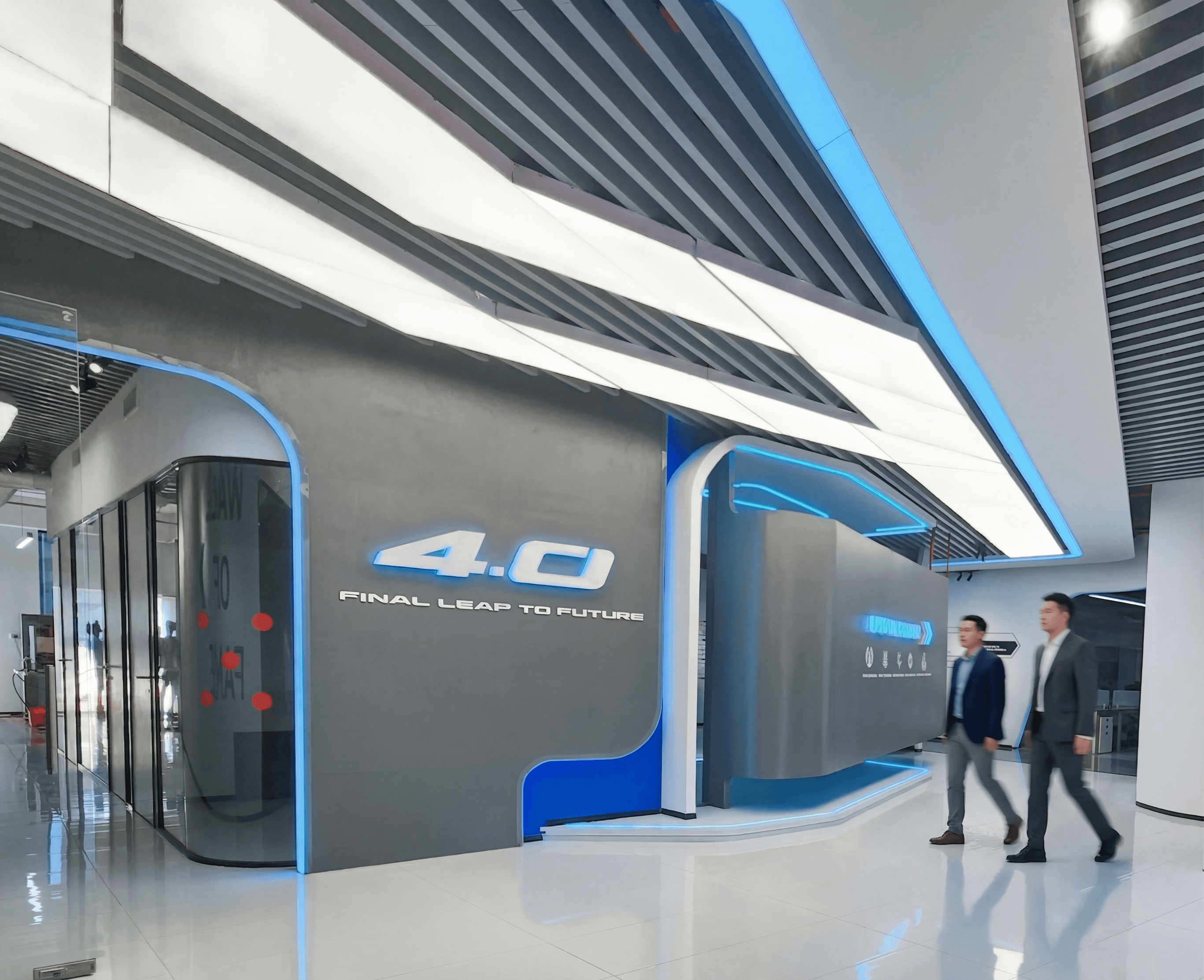
The Investment Was There. The Accountability Was Not.
Something changed in how organizations think about physical space.
Not long ago, an experience center was evaluated by how it looked. Did it photograph well. Did visitors compliment the finish. Did the screens work on opening day. These were the benchmarks, and the industry that served them was organized accordingly — designers handled aesthetics, AV vendors handled technology, and no one was formally responsible for what happened afterward.
That model no longer fits the environment organizations are operating in today.
Experience center design has become one of the most strategically significant investments an organization makes. These are the spaces where global partners form impressions, where investors decide whether to trust, where talent understands what an organization actually stands for, where clients move from interest to conviction. The stakes are not aesthetic. They are strategic.
And yet, in most cases, organizations investing in these environments still have no visibility into what they actually produce. Metrics that should be defined before design begins — stakeholder engagement depth, dwell time per zone, interaction frequency, brand perception shift, conversion impact — are undefined at the outset and entirely unvalidated after opening.
The result is a category full of high-value investments with limited accountability. Spaces that inform but do not consistently influence. That engage without measurable depth. That present without reliably converting.
This is the proof problem in experience center design. And it is the gap REDS™ was built to close.
What REDS™ Is, Precisely
REDS™ is not an expanded service line. It is not a rebrand of what Rubenius already did. It is a dedicated system — codified, structured, and built specifically for experience-critical environments — that transforms space from a visual discipline into a performance-driven one.
At its foundation is a non-negotiable principle: space is not a static infrastructure investment. It is a measurable business asset. Every square foot either builds brand equity or it does not. Every visitor interaction either moves someone closer to a decision or it does not. And whether it does or does not can be defined, tracked, and proven.
REDS™ achieves this by integrating four disciplines that most experience center design processes treat as separate: strategy, spatial design, behavioral analysis, and performance tracking. Under REDS™, these are a single system. Every spatial intervention is aligned with a defined objective. Every objective is linked to a measurable outcome. Every outcome is evaluated against benchmarks set before design began.
This is not how experience center design has traditionally been practiced. It is how it must be practised if the investment is to deliver the outcomes that justify it.
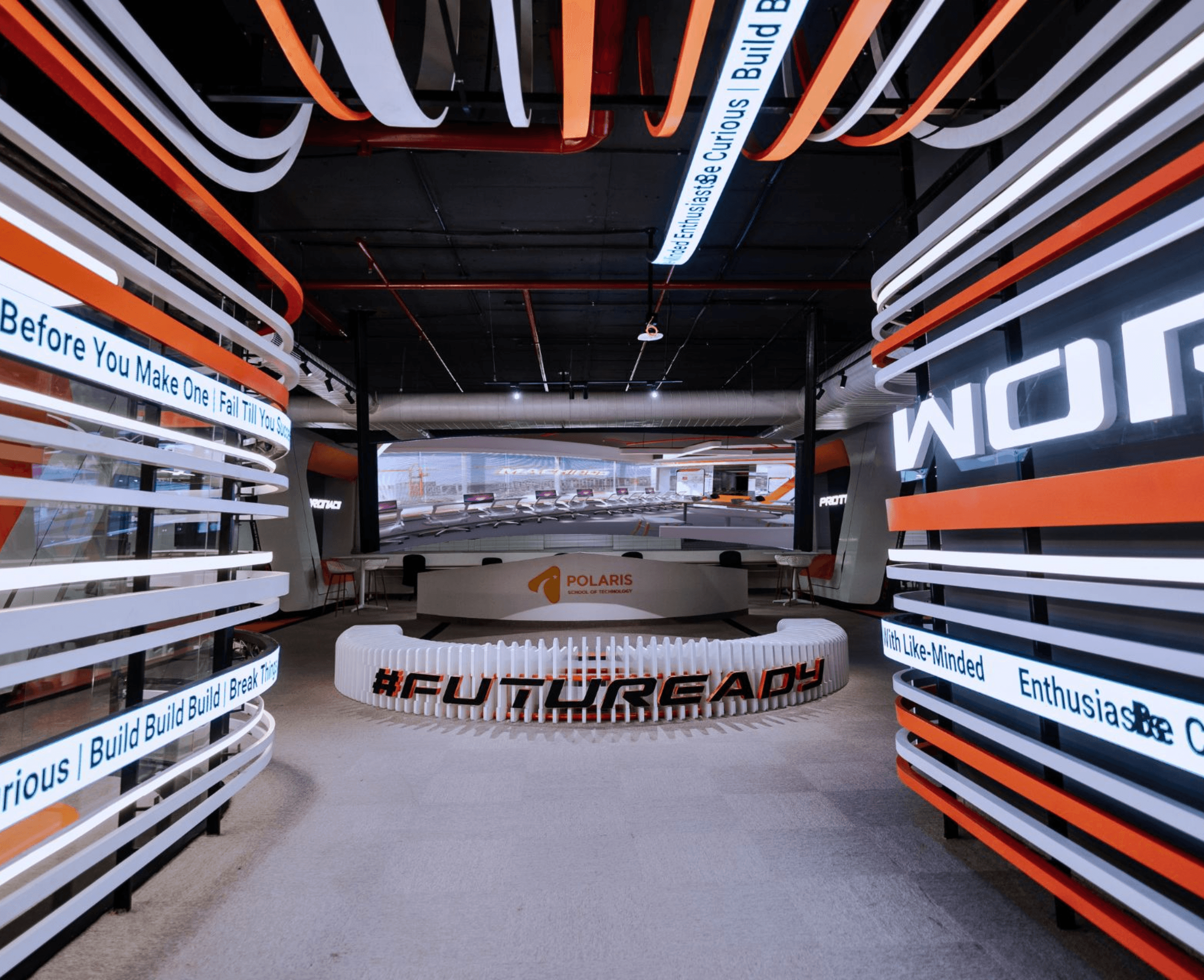
The Structural Problem This Solves
The primary failure in experiential design today is not poor execution. The failure is misalignment at the foundational level.
Briefs are vague. Success is undefined. Technology is integrated without documented usage outcomes. Spatial layouts are optimized for movement but not for behavioral impact. Brand narratives are communicated through content but never embedded in the spatial journey itself. And most critically, there is no consistent system to evaluate whether the environment performed as intended once the ribbon is cut and the photographer has left.
This produces environments that are visually complete and operationally passive. They exist. They do not perform. And because no one defined what performing was supposed to look like, no one can identify that the failure has occurred.
REDS™ introduces the structure that eliminates this ambiguity. Intent is clearly defined before design begins. Every decision is validated against that intent throughout delivery. Performance is measured after opening, at 30, 90, and 180 days, against benchmarks set at the very start of the engagement.
Space stops being speculative. It becomes accountable.
Why a Dedicated System — Not Just a Better Process
Rubenius established REDS™ as a dedicated vertical for a specific reason: the complexity and strategic importance of experience center design has reached a point where a better process is not enough. A system is required.
A process is applied case by case, adapted to circumstances, and subject to the judgment of individuals under pressure. A system is codified, repeatable, and consistent regardless of project scale, team composition, or timeline pressure. It has mandatory gates. It has named tools. It has defined deliverables at every phase. It produces the same structural rigor on a 1,500-square-foot innovation lab as it does on a 15,000-square-foot global experience center.
This distinction matters enormously for organizations making significant spatial investments. A better process means a better chance of a good outcome. A system means accountability for the outcome — defined before design begins, delivered through execution, and validated after launch.
REDS™ is that system. Every project within it begins with strategy and ends with proof.
What This Means for Organizations Planning an Experience Center
If your organization is planning an experience center, an innovation lab, or a corporate visitor environment, the conversation cannot begin with square footage or material palettes.
It must begin with three questions. What specific behavior must this space change? What does success look like in measurable terms, six months after opening? And who is accountable for proving it?
These are the questions REDS™ is built to answer — not retrospectively, not through assumption, but through a structured system that connects experience center design to business performance from the first workshop to the final post-occupancy report.
In a context where every investment must yield measurable value, space can no longer be left unmeasured.
Frequently Asked Questions
What is REDS™ by Rubenius?
REDS™ is a performance-driven experience center design system that connects every spatial decision to a defined business outcome, validated through post-occupancy measurement at 30, 90, and 180 days.
How is REDS™ different from traditional interior design?
Traditional interior design focuses on aesthetics and functionality; REDS™ integrates strategy, behavioral analysis, and performance tracking so space is evaluated on outcomes, not appearance.
What does experience-led design mean?
Experience-led design means every spatial decision guides visitor behavior, shapes perception, and influences measurable outcomes — not simply creates an attractive environment.