
How AI Is Transforming Modern Experience Centers

A visitor walks into an experience center and the journey adjusts to them before they say a word: content shifts based on their role, pacing responds to how long they linger, and the space itself seems to notice they are there. This is not a distant concept. It is what AI in Experience Centers already looks like when it is built around the visitor rather than around the novelty of the technology itself.
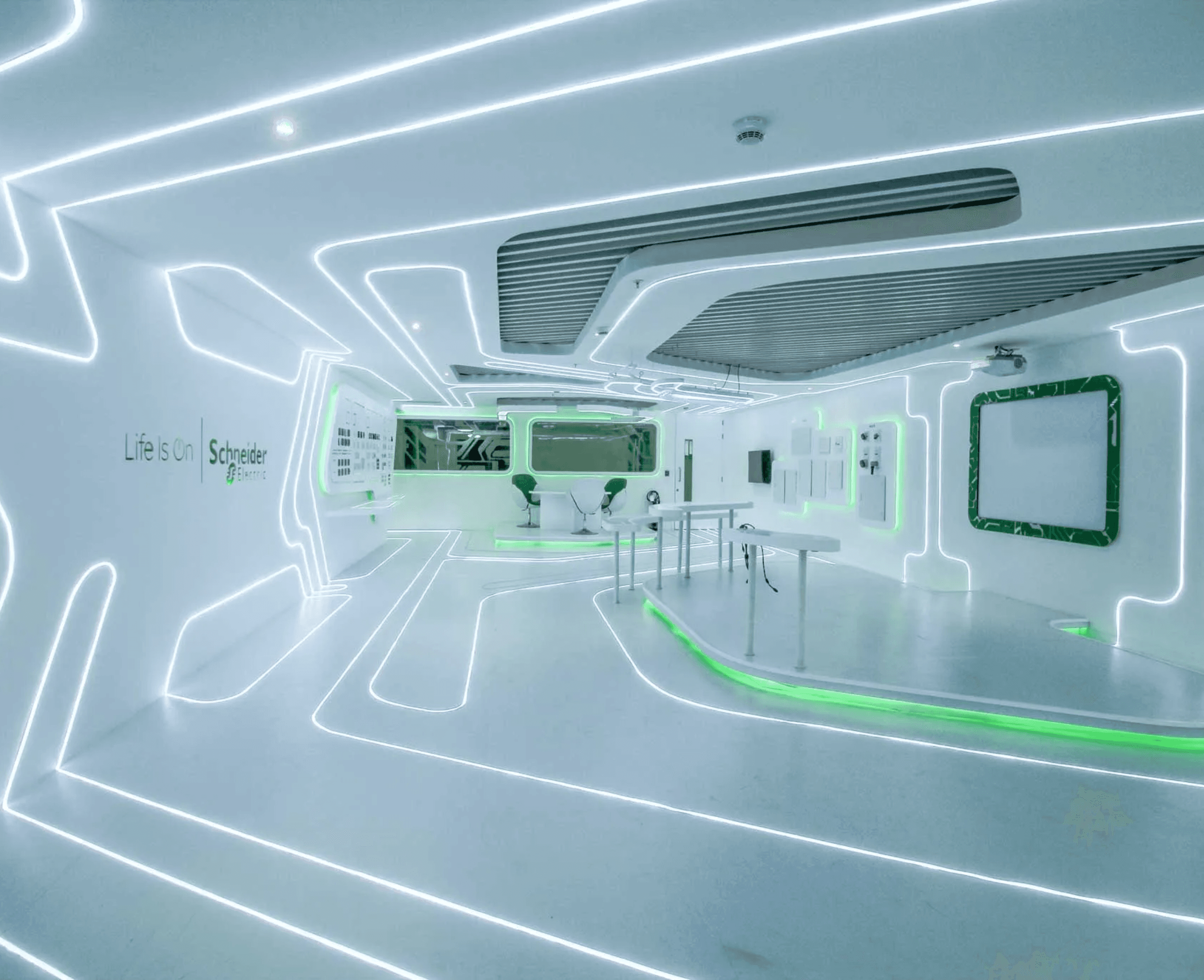
What Is AI in Experience Centers and Why It Matters Now
AI in Experience Centers refers to the use of artificial intelligence to sense, interpret, and respond to visitor behavior in real time, rather than presenting the same fixed content to every person who walks through the door. That might mean adjusting which story is told first based on a visitor's role, or adapting pacing based on how much time they actually have.
This matters now because visitor expectations have shifted. A generic, one-size-fits-all journey feels outdated to an audience that already receives personalised experiences from the apps and platforms they use daily. An experience center that cannot adapt to who is standing in front of it risks feeling static in comparison, no matter how advanced its underlying technology is.
How AI Personalization Changes What Each Visitor Sees
AI personalization means the content, sequence, and depth of an experience shift based on who the visitor is and what they came to understand. An investor delegation and a group of engineering students walking through the same experience center should not receive an identical journey, because they arrived with different questions and different attention spans.
Well-designed AI personalisation draws on simple signals, role, industry, prior interaction, or stated interest and uses them to reorder or emphasize content without requiring the visitor to notice the machinery behind it. The visitor should simply feel like the space understood what mattered to them. When personalisation is done well, it disappears into the experience rather than announcing itself.
Designing Smart Spaces That Respond to Visitors in Real Time
Smart spaces use sensors, computer vision, or connected devices to understand where visitors are, how they are moving, and where attention is concentrating, then adjust the environment accordingly. This could mean lighting that shifts to draw focus toward the next part of a journey, or a display that changes based on how long a group has been standing in front of it.
The goal of a smart space is never to showcase sensors. It is to remove friction from the visitor's understanding, making transitions feel natural rather than requiring a guide to manually cue every shift. When smart spaces are designed well, most visitors never consciously register the technology working behind the scenes. They simply feel that the space kept pace with them.
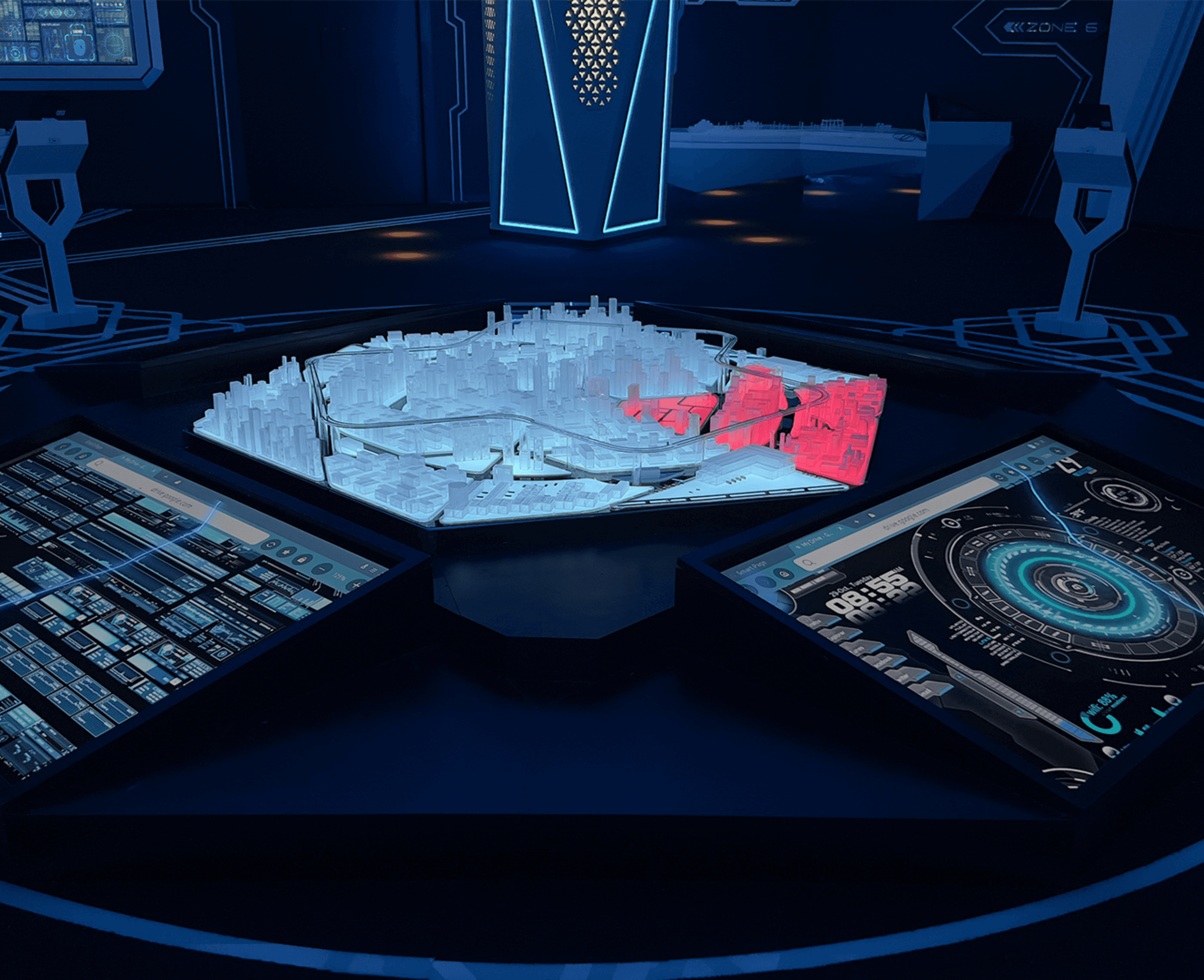
Why Interactive Experiences Outperform Static Displays
Interactive experiences ask a visitor to make a choice, touch something, or trigger a response, rather than simply observe. That single shift, from watching to doing, dramatically increases how much a visitor retains, because participation forces active mental engagement rather than passive absorption.
Static displays can communicate information effectively, but they rarely create memory the way interactive experiences do. A visitor who chooses which data set to explore, or triggers a simulation themselves, walks away with a stronger sense of ownership over what they learned, and that ownership is what makes the message durable after they leave the building.
How REDS Integrates AI in Experience Centers Without Losing the Story
This is where most AI driven experience centers go wrong: technology gets introduced because it is available, not because it strengthens the narrative. REDS approaches AI in Experience Centers from the opposite direction, starting with the story an organization needs to tell, then identifying where AI personalization, smart spaces, or interactive experiences genuinely deepen that story rather than distract from it.
That discipline matters because AI without narrative purpose quickly becomes a novelty that visitors forget as soon as they encounter the next impressive display elsewhere. AI in service of a clear story becomes something a visitor actually carries with them, which is the entire point of building the experience center in the first place.
Ready to Bring AI Into Your Experience Center the Right Way
If your experience center technology feels impressive but forgettable, the issue is likely sequence, not sophistication. REDS integrates AI in Experience Centers around the story your organisation needs to tell, using AI personalisation, smart spaces, and interactive experiences with intent.
Talk to REDS about designing an AI enabled experience center that visitors actually remember.
Frequently Asked Questions
What does AI in Experience Centers actually mean?
It means using artificial intelligence to sense and respond to visitor behavior in real time, such as adjusting content, pacing, or sequence based on who a visitor is and how they are engaging with the space.
How does AI personalisation work in a physical space?
AI personalisation uses signals like a visitor's role, industry, or prior interaction to adjust which content is emphasised or shown first, tailoring the journey without requiring the visitor to select preferences manually.
What are smart spaces in experience center design?
Smart spaces use sensors, computer vision, or connected devices to detect visitor movement and attention, and then automatically adjust elements such as lighting, content, or pacing to match the visitor's behaviour.
Why do interactive experiences create better retention than static displays?
Interactive experiences require active participation, such as making a choice or triggering a response, which engages the brain more deeply than passive observation and produces stronger, longer-lasting memory.