
What Is an Experience Center? The Brand Equity Asset Most Businesses Overlook

You've sat through the pitch that promises the future and delivers forty bullet points instead. This is the problem most organisations run into eventually: their innovation, scale, or capability is too complex to explain in a meeting, a brochure, or a slide deck, and traditional formats keep failing to build real understanding or emotional buy-in. People forget what they're told. They remember what they experience. An experience center exists to solve exactly that gap.
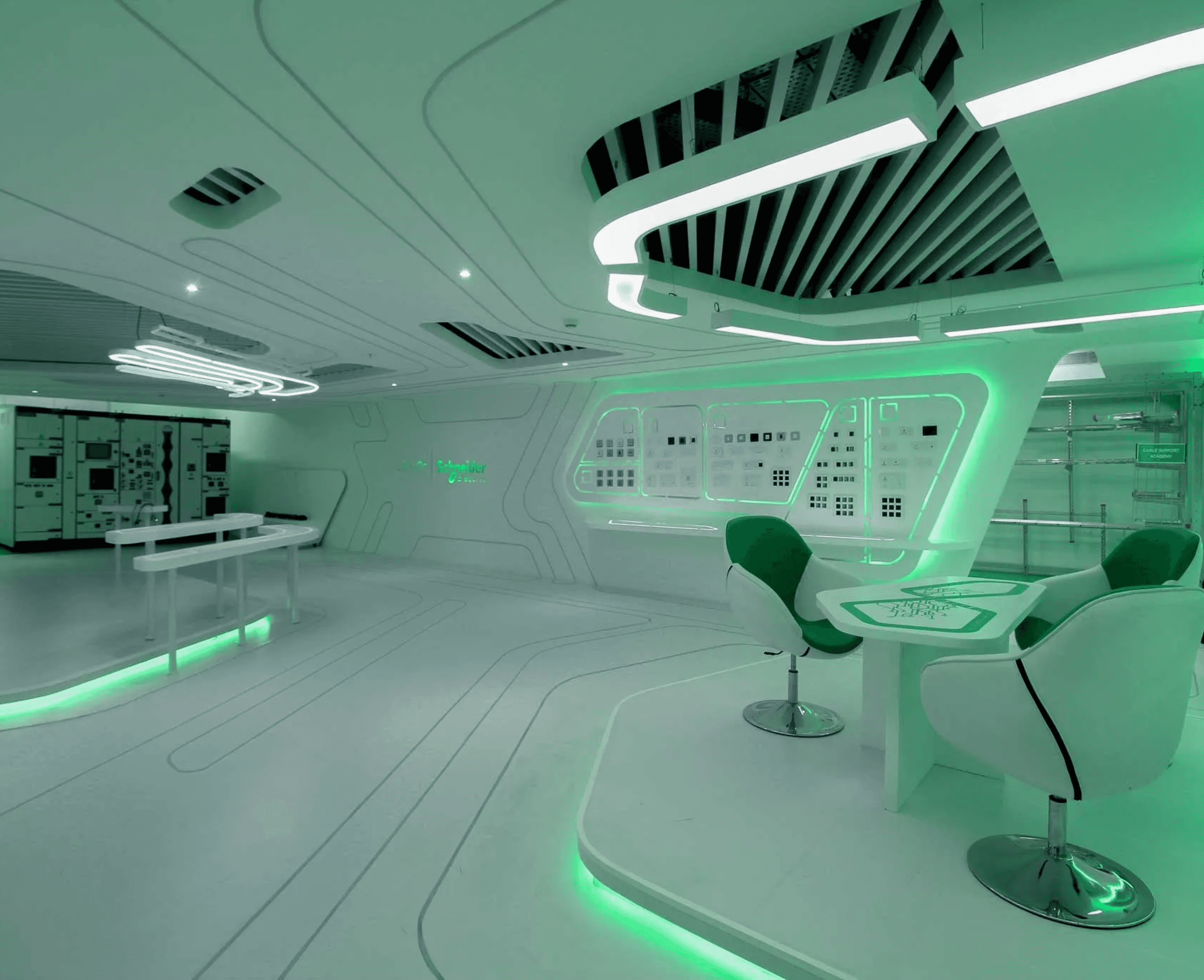
Why Do Traditional Formats Fail to Build Brand Equity?
Ask ten employees what your brand actually stands for, and you'll usually get ten different answers. That inconsistency is expensive. Brand equity isn't built through logos, advertising, or a well-written mission statement anymore. It's built through what people feel when they walk into a space, and most organisations have nowhere for that to happen.
The consequences show up quietly at first: prospects who can't repeat your story after a meeting, investors who leave unconvinced despite strong numbers, and competitors with a similar offering who somehow feel more trustworthy. None of this is a messaging problem. It's the absence of a designed environment where a brand's scale and innovation can actually be felt, not just described.
Ask a visitor a week later what they remember about a badly built space, and if the honest answer is "the coffee," the format failed regardless of budget. Most organisations don't lack content. They lack a place where that content becomes a story someone can walk through and repeat afterward, instead of a folder they forget by the parking lot.
An experience center is a physical space designed to help visitors understand, feel, and remember an organisation's brand, products, or capabilities through interactive, immersive engagement, not through a slide deck or a sales pitch. Unlike a showroom or an exhibition stall, it's built around a story, not a set of items to look at.
How Does Experience Center Design Solve This?
The fix isn't more content. It's a designed journey: arrival, understanding, engagement, a defining moment, and a takeaway, built through the combination of spatial design, storytelling, and technology working toward one outcome instead of competing for attention.
This is where the Rubenius Experiential Design System comes in: a framework for aligning narrative, spatial design, and technology integration around a single brand story rather than a scattered collection of screens and displays. Design decides the sequence and emotional arc visitors move through. Technology, interactive walls, projection mapping, data visualisation, is only introduced where it serves that story, never as a standalone attraction.
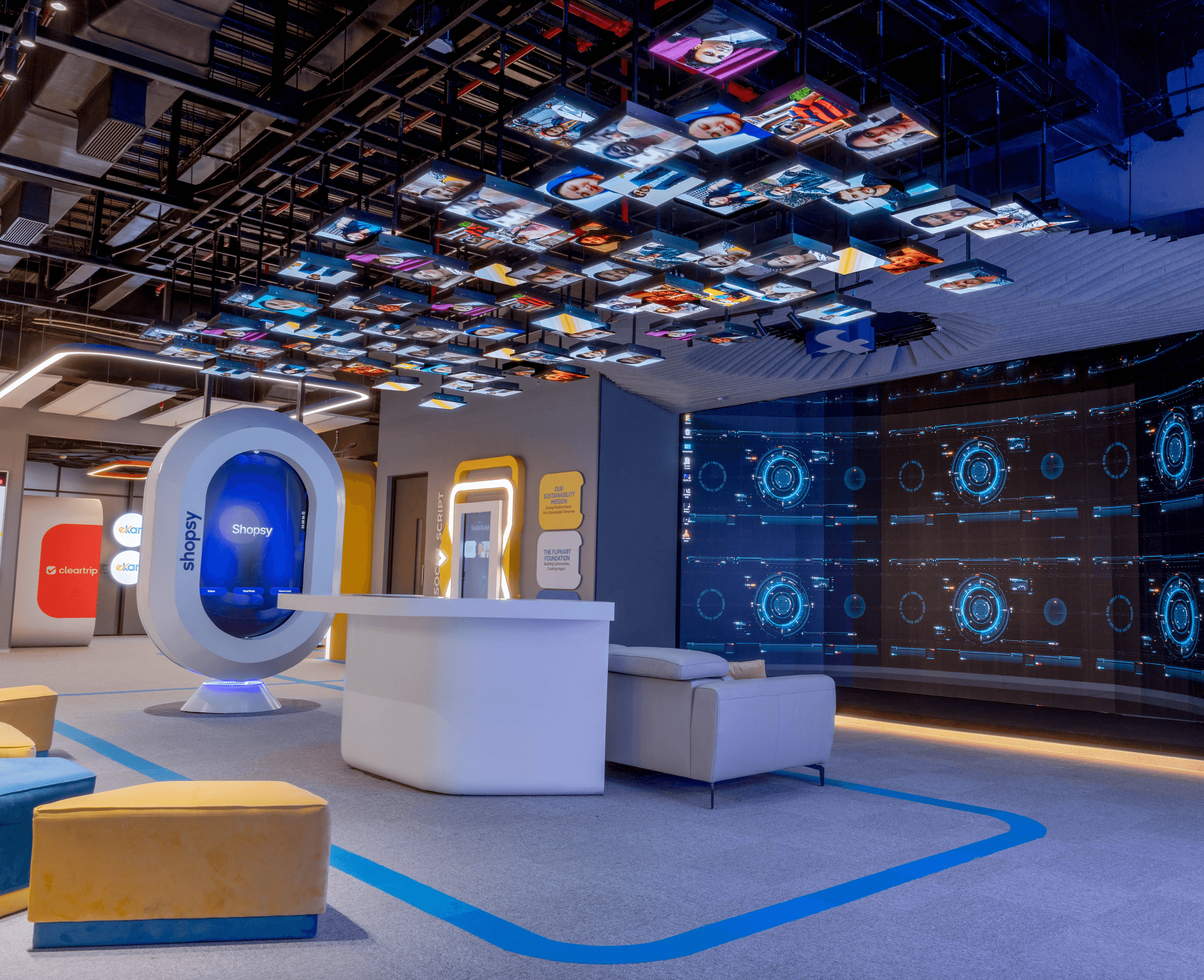
Not every organisation needs the same shape of space. A customer experience center is built for prospects, partners, and clients, helping them understand a product or service clearly enough that the decision to buy gets easier. A brand experience center is built to make identity physical, values and vision made walkable rather than written down. A corporate experience center serves a mixed internal and external audience, employees, investors, government delegations, communicating scale and culture at once.
What Business Impact Does an Experience Center Create?
Organisations that treat their experience center as a long-term brand equity asset, rather than a lobby upgrade, see the return show up in four places: stronger brand perception among visitors who leave able to repeat the story themselves, faster trust-building with partners and investors, a measurable edge over competitors relying on aesthetics alone, and a physical answer to why talent should choose them over a similarly-paying competitor.
The organisations that get this wrong usually made one of three mistakes: building a demo center and calling it an experience center, building it once and never updating it, or never measuring whether it actually changed how visitors think or feel about the brand.
Getting it right means treating the space as an asset that keeps paying back in perception, trust, and recall long after it opens, not a lobby upgrade that quietly stops earning its keep after the first quarter. If explaining your product, scale, or culture in a meeting keeps falling flat, if competitors with a similar offering are winning trust faster, or if your growth story is bigger than words can carry, that's usually the signal an experience center is worth the investment.
If explaining your product, scale, or culture in a meeting keeps falling flat, let REDS turn it into an experience people can see, feel, and remember.
Talk to REDS about your experience centre.
Frequently Asked Questions
What is the difference between an experience center and a showroom?
A showroom displays products. An experience center is designed as a narrative journey that builds understanding, emotion, and brand equity, not just product visibility.
How does an experience center create brand equity?
It turns brand values into something visitors physically feel, through consistent craft, storytelling, and technology, building trust and recall over time rather than through a single visit.
What's the difference between a customer, brand, and corporate experience center?
A customer experience center targets prospects and clients, a brand experience center expresses identity and values, and a corporate experience center serves a mixed internal and external audience, often including talent and culture goals.