
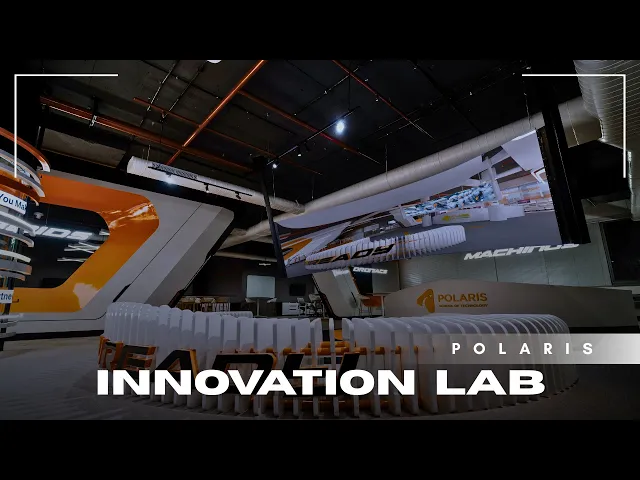
How to Build an Innovation Lab That Supports Experiential Learning in a Tech School

Most tech schools have built one at some point: a dedicated space filled with prototyping equipment, digital screens, collaborative furniture, and a name like the Innovation Lab, Future Lab, or Makerspace. The intention is usually clear: to give students a place to experiment beyond the classroom.
But an innovation lab does not become meaningful simply because students have access to a sophisticated space. Without a clear learning strategy, defined outcomes, faculty involvement, and a connection to real-world technology and industry, even the most impressive lab can become an underused facility.
The problem is rarely the room itself. It is what was missing before the room was designed.
What Is an Innovation Lab in a Tech School and Why Do Many Fail?
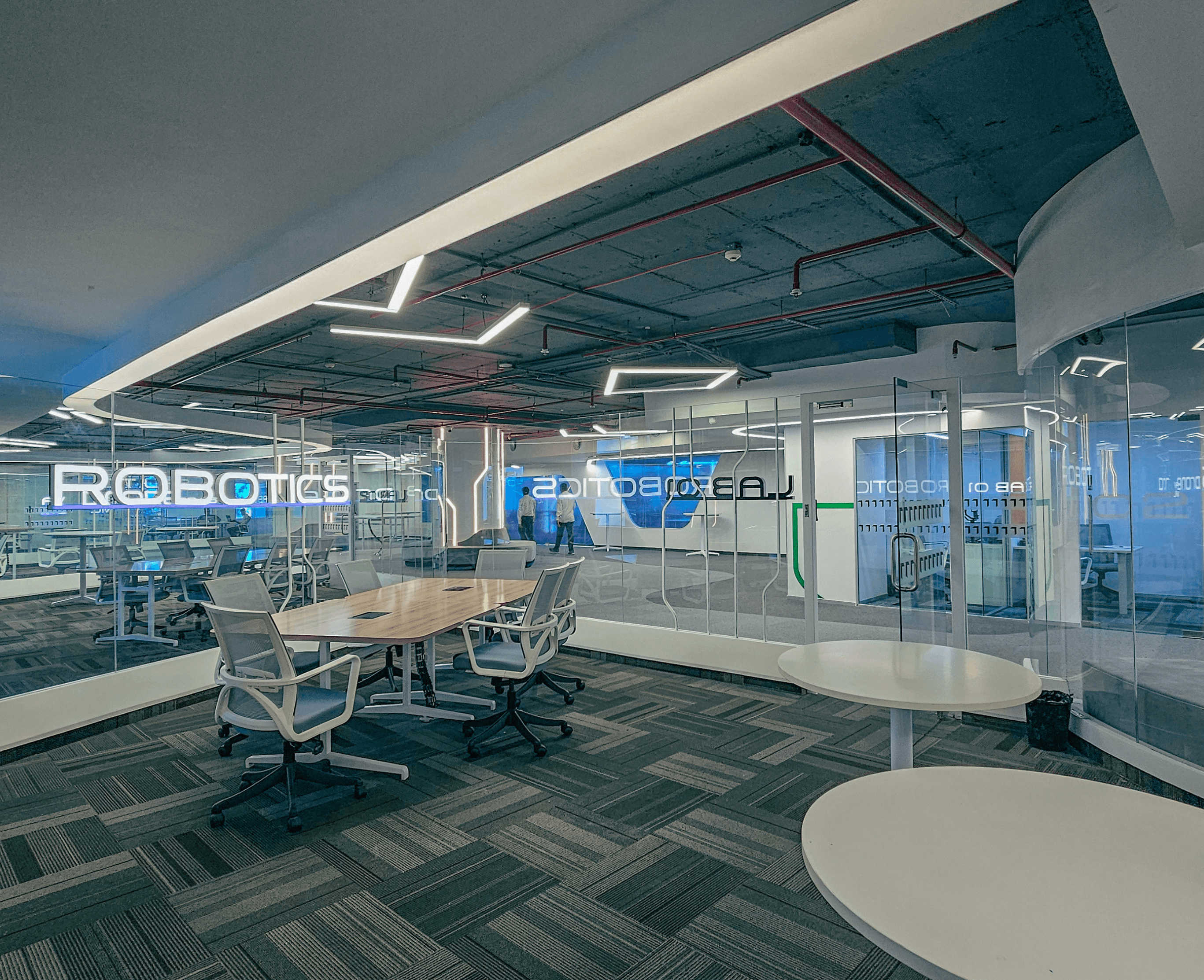
An innovation lab in a tech school is a dedicated learning environment where students can explore ideas, experiment with emerging technologies, build prototypes, collaborate across disciplines, and solve real-world problems.
Unlike a conventional classroom, an effective innovation lab should support experiential learning, allowing students to learn by doing. Students should be able to move from understanding a problem to developing an idea, testing it, building a prototype, receiving feedback, and improving the solution.
This is where many school innovation labs fall short.
The common mistake is designing the physical space before defining how students are expected to learn within it. Schools invest in robotics equipment, 3D printers, interactive displays, flexible furniture, and technology infrastructure without first establishing the learning models, curriculum connections, or student outcomes the innovation lab needs to support.
The result can be an impressive space that is used occasionally for workshops rather than becoming an integral part of the school's learning ecosystem.
The Missing Learning Strategy Behind Failed Innovation Labs
A successful school innovation lab needs a clear learning strategy built around experiential learning.
This means understanding what students should be able to do inside the lab, which skills they should develop, how projects connect with the curriculum, and how experimentation progresses into meaningful outcomes.
For a tech school, this could include areas such as robotics, artificial intelligence, coding, electronics, product design, IoT, automation, digital fabrication, or interdisciplinary problem-solving.
Without this strategy, the lab can become a collection of technologies rather than a structured learning environment.
A strong innovation lab creates a pathway where students can move from curiosity to exploration, exploration to experimentation, experimentation to prototyping, and prototyping to problem-solving.
The space becomes an active extension of the curriculum rather than a separate destination.
Why Student Outcomes Need to Be Defined Before the Innovation Lab Is Built
The success of an innovation lab in a tech school cannot be measured by how many students enter the space or how advanced the equipment looks.
It should be measured by what students actually learn and create.
Depending on the school's objectives, outcomes could include:
Number and quality of student projects developed
Participation across different grades and disciplines
Development of problem-solving and critical-thinking skills
Prototypes created and tested
Participation in competitions and hackathons
Industry-linked projects
Student-led research and experimentation
Entrepreneurship and product development opportunities
Progression from classroom concepts to practical applications
Defining these outcomes before designing the innovation lab changes the entire approach to the space.
Instead of asking, "What equipment should we put here?", the school begins by asking, "What should students be able to achieve here?"
That question leads to a much more purposeful design and creates stronger opportunities for experiential learning.
How Experiential Learning Makes an Innovation Lab Work
Technology education cannot rely entirely on lectures, textbooks, and examinations. Students need opportunities to apply concepts in situations where the answer is not already known.
This is where experiential learning becomes central to an innovation lab.
Students can work on open-ended challenges, build prototypes, test technologies, collaborate with peers, and learn through iteration. Failure becomes part of the learning process rather than something to be avoided.
For example, a robotics project can combine programming, electronics, mechanical design, mathematics, and problem-solving. An AI project can connect coding with ethics, data, research, and real-world applications.
The innovation lab therefore becomes more than a physical facility. It becomes a learning ecosystem where multiple disciplines intersect and students learn through direct experience.
Why Faculty and Industry Integration Matter
Even the best-designed innovation lab will struggle if teachers are not equipped to use it effectively.
Faculty need to understand how the space supports their curriculum and how project-based and experiential learning can be integrated into teaching. The lab should make it easier for educators to create meaningful challenges rather than becoming another facility they are expected to manage.
Industry connection can add another layer of relevance.
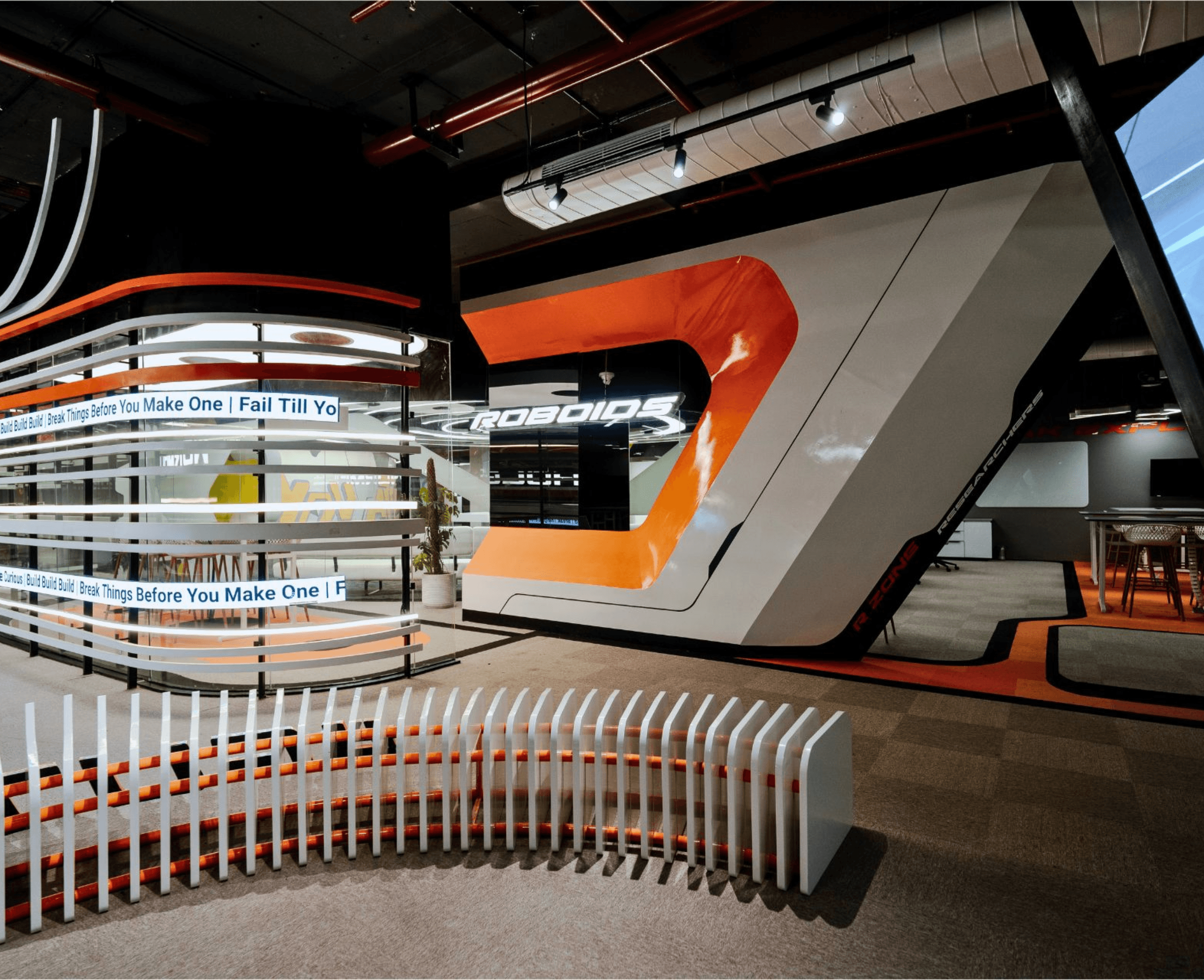
Technology companies, startups, researchers, and professionals can introduce real-world challenges, mentor students, provide feedback on projects, and expose students to technologies and careers beyond the classroom.
This creates a bridge between what students learn, what they build, and what the technology industry actually needs.
For a tech school, this connection is particularly important because the technologies students encounter in education continue to evolve. An innovation lab can provide the environment needed to connect classroom learning with emerging technologies and practical applications.
How REDS Builds Innovation Labs for Tech Schools
This is the gap REDS addresses before spatial design begins.
REDS starts by understanding the school's educational vision, student profile, curriculum, technology focus, faculty requirements, and desired learning outcomes. The physical environment is then designed around the learning journey rather than around a collection of equipment.
That means defining how students move through different stages of learning, from ideation and research to experimentation, prototyping, testing, presentation, and collaboration, and designing the space, technology, infrastructure, and furniture around those activities.
The result is not simply an innovation lab that looks futuristic.
It is an innovation learning ecosystem designed to encourage curiosity, experiential learning, experimentation, collaboration, and real-world problem-solving.
Build an Innovation Lab That Becomes Part of Learning
An innovation lab should not be a room students visit occasionally. It should become a place where ideas are tested, technologies are explored, problems are solved, and learning becomes tangible.
If your school is planning an innovation lab or has an existing space that is not being fully utilised, the first question should not be "How should we redesign the room?"
It should be "What do we want our students to experience, learn, and create here?"
REDS helps tech schools translate that vision into an innovation lab designed around experiential learning, interdisciplinary collaboration, emerging technology, and measurable student outcomes.
Frequently Asked Questions
Why do innovation labs in tech schools fail?
Many fail because the space is designed before the school defines its learning objectives, curriculum integration, faculty involvement, and student outcomes. Without these foundations, the innovation lab can become an underused facility rather than an active part of the learning ecosystem.
What should a tech school consider before building an innovation lab?
The school should first define its educational goals, student learning outcomes, curriculum connections, technology focus, faculty requirements, industry partnerships, and the types of projects students are expected to undertake.
What is the role of experiential learning in an innovation lab?
Experiential learning allows students to apply concepts through practical activities such as experimentation, prototyping, testing, collaboration, and problem-solving. It turns the innovation lab into an active learning environment rather than simply a room containing technology and equipment.
What is the difference between a makerspace and an innovation lab?
A makerspace primarily provides tools and resources for students to build and experiment. An innovation lab can go further by integrating structured learning, interdisciplinary collaboration, technology, research, prototyping, and real-world problem-solving into a broader educational framework.
How can an innovation lab support experiential learning?
It can provide students with opportunities to work on real problems, experiment with technologies, build prototypes, test ideas, collaborate with peers, and learn through iteration rather than relying only on theoretical instruction.
How can a tech school measure the success of its innovation lab?
Success can be evaluated through student participation, projects developed, skills acquired, prototypes created, interdisciplinary collaboration, industry projects, competitions, research activity, and other learning outcomes aligned with the school's objectives.