
Experience Center vs Demo Center: Understanding the Differences

A prospect walks out of your beautifully lit "experience center" and asks, on the way to the car, "so what do you guys actually do?" That question is the tell that something's wrong: what you built was a demo center wearing an experience center's name tag.
Why Do Businesses Keep Confusing These Three Spaces?
Somewhere right now, a company is walking a room full of investors through a demo-center-style feature list and wondering why nobody seems moved. Somewhere else, a sales team is dragging a technical buyer through an emotional brand story when all they wanted was to see the product actually run. Both are expensive mismatches, and both come from the same root problem: naming the space wrong before a single wall goes up.
A demo center is transactional by design, an engineer walking a visitor through fifteen product features in forty minutes, checking each one off a list. It answers "does this work?" and rarely attempts to answer "should I trust this organisation?" An executive briefing center serves a different problem entirely: high-stakes, small-audience conversations, usually with confidential context and custom content per visitor, built for relationship-building alongside a single curated product experience. Neither is designed to build broad brand trust or emotional recall, and expecting either to deliver experience center outcomes is where the mismatch starts.
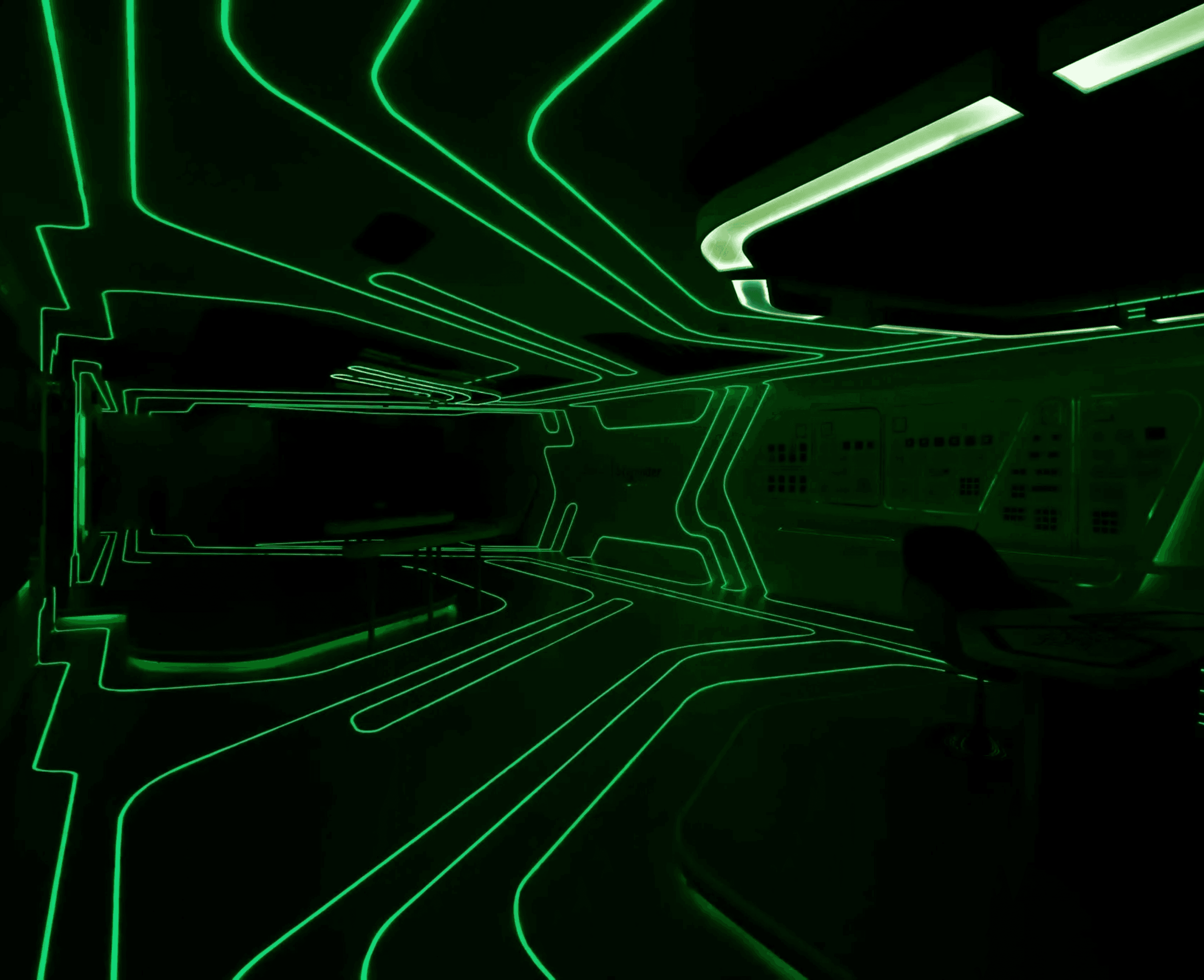
How Does Experience Center Design Solve This?
An experience center is a strategically designed journey, arrival, understanding, engagement, a defining moment, a takeaway, built around a story rather than a function. Where a demo center proves a product works and an executive briefing center drives a specific decision, an experience center is built through the Rubenius Experiential Design System to wrap product experience inside narrative, emotional design, and measurement, so visitors leave able to repeat the story themselves, not just recite features.
Product experience, the moment a visitor interacts with what you make, is a single ingredient in that design, not the whole recipe. Strip out the narrative and the measurement, and you're left with a well-lit product experience that visitors forget by the time they reach the elevator, no matter how polished the technology behind it was.
Experience Center | Demo Center | Executive Briefing Center | |
Primary Purpose | Build understanding, emotion, and brand equity | Prove product functionality | Drive high-stakes strategic decisions |
Typical Audience | Broad: customers, partners, investors, employees | Prospects and technical buyers | Senior executives and key decision-makers |
Content Style | Narrative journey across multiple zones | Feature-by-feature walkthrough | Confidential, customised per visit |
Duration | 30–90 minutes, immersive | 15–45 minutes, functional | Often half a day, conversation-led |
Success Measured By | Recall, trust, brand perception shift | Feature comprehension | Deal progression, relationship depth |
Most organisations actually need a blend of these, but only once each purpose is named honestly and designed for on purpose, not defaulted into. A space built without that clarity usually ends up doing one job adequately and the other two badly, no matter how much budget went into the finish.
[PROJECT EXAMPLE — PENDING: awaiting confirmation on whether to source from the REDS Master Deck / Experience Center Brief, or an assigned project. Insert here, one example, 100–150 words, illustrating a space correctly designed for its actual purpose rather than a mismatched one.]
What's the Business Impact of Getting the Naming Right?
If your goal is to be remembered and trusted at scale, an experience center is the right investment. If your goal is proving a product works to a technical buyer, a demo center does that job well, and cheaply. If your goal is moving three or four senior decision-makers toward a major commitment, an executive briefing center earns its cost. Naming the space correctly isn't a branding exercise. It's the first design decision, and getting it wrong means building the wrong thing well, at full price. The cost of that mistake rarely shows up on the invoice. It shows up months later, in a pipeline that didn't move and a talent pitch nobody remembered.

Frequently Asked Questions
What is the main difference between an experience center and a demo center? An experience center is designed as a narrative journey to build understanding, emotion, and brand equity. A demo center is designed to prove a product works, with no narrative requirement attached.
Is an executive briefing center the same as an experience center? No. An executive briefing center serves a small, senior audience with customised, often confidential content, while an experience center is typically designed for a broader mix of visitors at scale.
Can one space serve as both a demo center and an experience center? It can, if the zones and content are deliberately designed for both purposes. Without that intent, most spaces default to doing one job well and the other poorly.