
How Experience Center Design Drives Business Growth and Customer Engagement

A board member walks through your new experience center, nods politely, and says nothing on the way out. That silence is the most expensive moment in the entire project, and it's almost always a design problem, not a budget problem.
Why Do Experience Centers Impress Once and Then Stop Working?
Most experience centers open, impress for a quarter, then quietly stop moving the numbers anyone actually cares about. You've seen the space that cost a fortune and still gets described as "nice." Not memorable. Not persuasive. Just nice. That's the gap between decoration and design that actually performs.
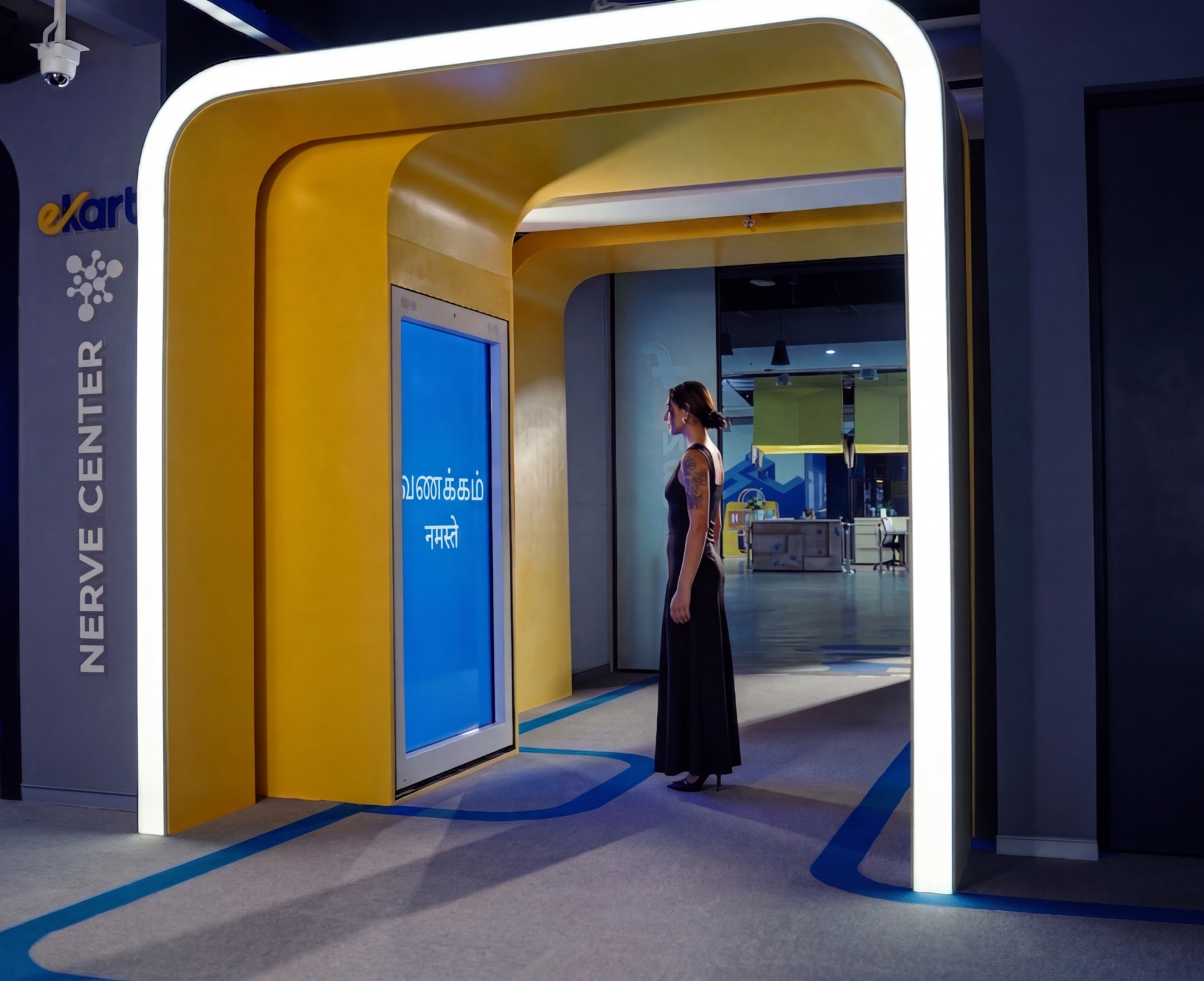
The pattern behind the failure is almost always the same: a team three weeks from a launch date, arguing about finishes and screen sizes, when nobody in the room can say what the space is actually supposed to change. Skip or rush that question, and no amount of clever technology later can fix what wasn't decided at the start. A visitor pausing at the entrance, unsure where to go first, glancing for a cue that never comes, is a planning failure showing up as a design one.
Think about the last exhibit you walked through and can actually describe from memory, versus the ten you can't. Engagement isn't the same as footfall. A space can be busy and still be forgettable, and a board member's polite silence on the way out is usually the first sign that footfall was never the problem.
How Does Experience Center Design and Technology Actually Drive Growth?
Experience center design is the strategic and spatial planning behind how a physical space communicates a brand's value, story, and capability. It starts with a business question, not a material palette, and applies the Rubenius Experiential Design System to connect every design decision, spatial, narrative, and technological, back to a measurable outcome before a single wall goes up.
Done right, this shortens sales cycles by letting prospects experience a capability directly instead of sitting through a deck. It builds investor and partner confidence by making scale and innovation visible instead of described. It strengthens employer branding, giving GCCs and enterprises a physical answer to why a candidate should choose them over a competitor offering similar pay. None of this happens by accident; it happens because the design was built around a defined outcome and a visitor journey, arrival, orientation, engagement, a defining moment, a takeaway, from day one.
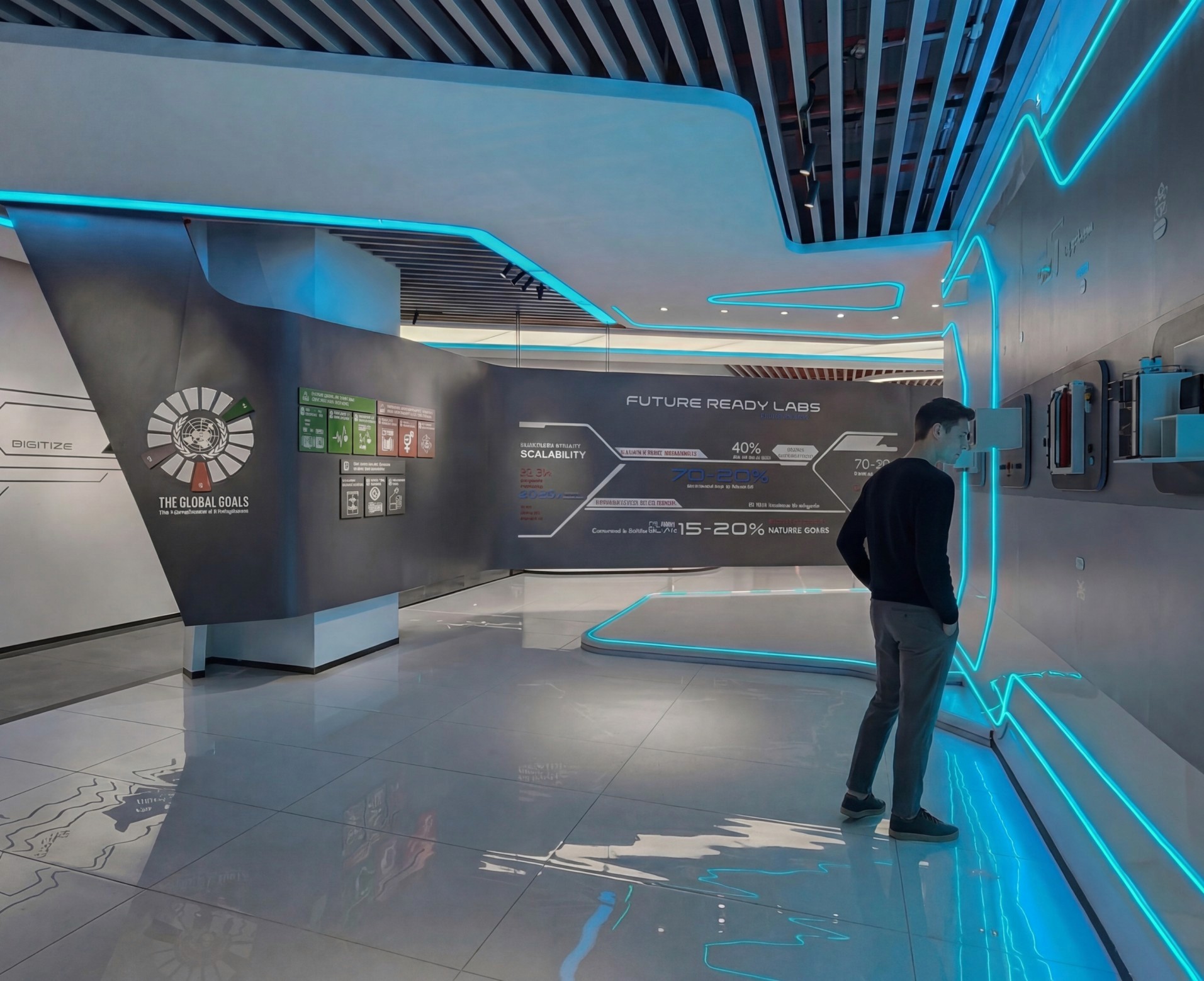
Technology plays a specific role in this, not a decorative one: it responds to visitors instead of just displaying at them, and it earns its place only when it deepens the story a visitor is already following. A floor plan organises space. The visitor journey organises meaning, guiding people through arrival, understanding, engagement, and a memorable takeaway, which is what actually turns a walk-through into a business outcome.
What Business Impact Does This Create?
Ask most teams six months after opening whether the space is working, and you'll get a shrug and an anecdote about a happy client visit. That's not an answer, it's a guess. The organisations that get measurable impact define success upfront, engagement rates, dwell time, brand perception shift, sales cycle impact, and design toward those numbers deliberately rather than hoping they show up afterward.
The single most common failure isn't bad design. It's no measurement. Businesses invest heavily, open the doors, and never check whether the space changed minds, behaviour, or revenue. Without that feedback loop, the same expensive mistakes get repeated in the next project, dressed up as a new design each time.
Growth-driving experience center design isn't about a bigger budget or flashier technology. It's about deciding, before anything gets built, exactly what the space is supposed to change, and having the nerve to check afterward whether it did. The organisations that get this right treat every design decision, spatial, narrative, and technological, as accountable to that number, not just to how the space looks on opening day.
Frequently Asked Questions
How does experience center design affect business growth? It shortens sales cycles, builds investor and partner confidence, and strengthens employer branding, but only when the design is built around specific business outcomes rather than aesthetics alone.
What is the role of experience center planning? Planning defines the business objectives, audience, and success metrics before design begins. It's the phase that determines whether the finished space can actually perform.
Why does the visitor journey matter more than the floor plan? A floor plan organizes space. A visitor journey organizes meaning, guiding people through arrival, understanding, engagement, and a memorable takeaway, which is what actually drives recall and business impact.
Connect today with the REDS team to understand what's missing in your space that brings customer engagement